Why ISO Certification Matters for Culinary Courses in Nepal?
Description
What is ISO Certification?
ISO certification means a company meets international standards set by the International Organization for Standardization (ISO). These rules ensure products, services, and processes are safe, high-quality, and well-managed. Being ISO certified shows a company follows the best global practices for quality and safety.
For education, ISO 21001 focuses on improving learning processes and ensuring training meets learner and industry expectations.
In culinary education, ISO certification means a school or training center has robust systems for food safety, curriculum quality, hygiene, staff training, and student feedback. It’s not just a “stamp,” it’s a guarantee that the culinary courses you take are held to international culinary standards.
The Role of ISO in Culinary Education
Let’s explore how ISO certification shapes culinary training quality, reputation, and global relevance.
1. Ensuring Culinary Quality Standards in Training
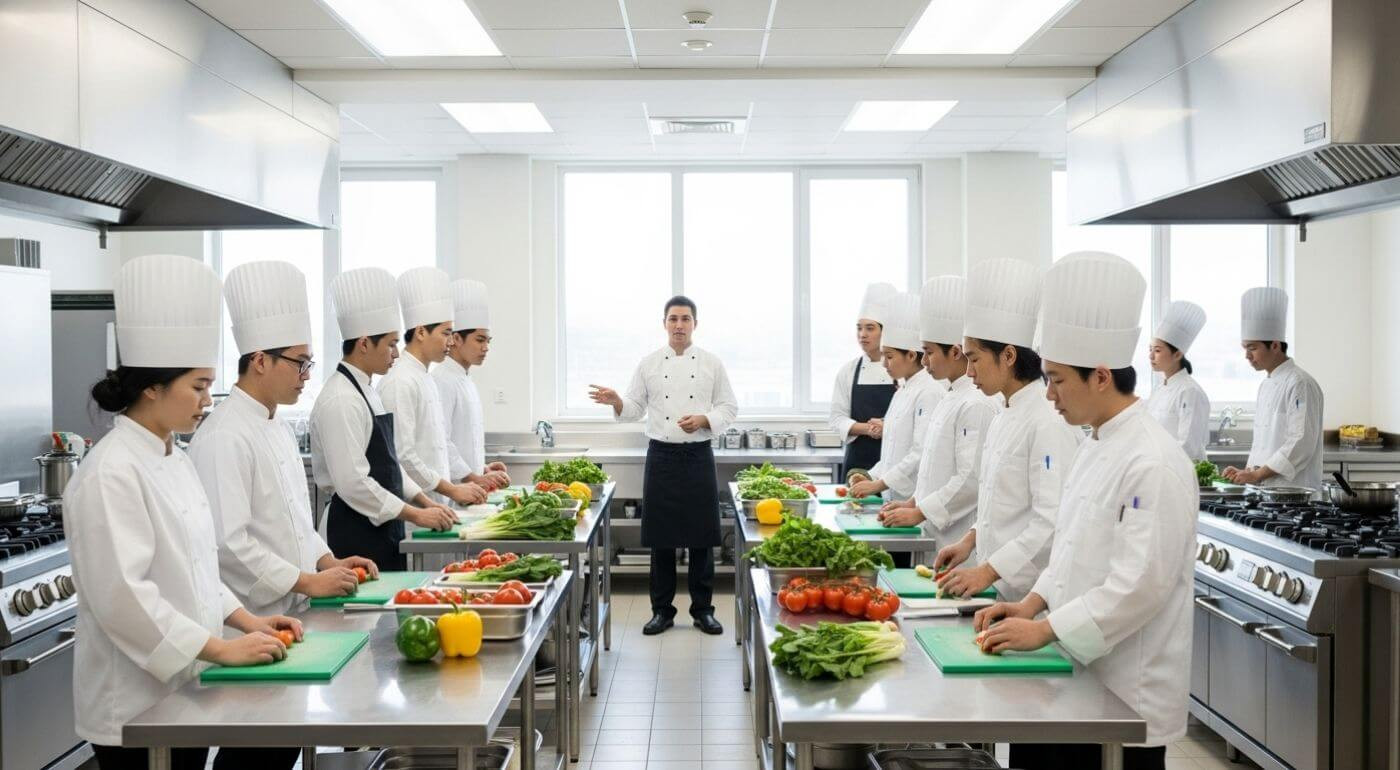
ISO-certified culinary training makes sure every student learns safe and high-quality cooking, no matter who the teacher is. Everyone follows the same recipes, works with modern kitchen tools, and gets lots of practice. From picking ingredients to serving the dish, students learn to do everything carefully. This helps them get real cooking experience, feel confident, and cook each dish the right way.
2. Building Credibility for Accredited Schools
ISO certification is a trust signal that shows schools follow high-quality standards. In Nepal, where tourism is growing fast, this helps top hospitality programs stand out.
Certified schools are officially recognized for meeting global quality rules, which builds trust among students, parents, and employers.
Without certification, schools might just make promises. But ISO proves quality through regular checks.
At IHTS, ISO helped build partnerships with hotels like Hyatt Regency, Marriott, Yak & Yeki, etc. For you, it means your diploma is respected and trusted by employers. IHTS instructors are industry professionals with over 10 years of 5-star hotel experience.
Dawa Dindu sherpa
IHTS is the best hotel training centre at Old Baneshwar, and I'm also here to develop my skills in a diploma in culinary arts of 6-month course. And all the staff and chefs are excellent and friendly with everyone.
3. Building International Recognition and Partnerships
When a culinary training center in Nepal is ISO certified, it becomes more visible to international partners (other schools, hotel chains, tourism boards). This opens doors for your exchange programs and internships abroad. It means your school aligns with international culinary standards and can compete globally. This also provides you with confidence when applying abroad under a work visa or internship programs.
4. Improving Student Outcomes and Employability
ISO certification culinary courses help you get better outcomes: mastery of skills, safer handling of food, better understanding of hygiene, and more disciplined work habits. Employers care about chef certification because they want to hire people who need less supervision, make fewer mistakes, and uphold quality.
If you graduate from ISO certified programs, you often find jobs more easily and perform better. Ready to level up? Explore ISO-certified culinary courses at IHTS and start your journey toward a global chef career.
Benefits of ISO Certification for Aspiring Chefs in Nepal
For aspiring chefs, ISO certification means more than just passing tests; it’s about learning skills that meet global demand.
Want to be Nepal’s next top chef? ISO certification at IHTS helps students grow from beginners to pros with training that matches world standards. Here’s why it helps you succeed.
1. Enhanced Safety and Hygiene in Culinary Courses
Safety in the kitchen is something you can’t compromise on. ISO standards, like ISO 22000 for food safety, help make sure every part of the kitchen stays clean, safe, and well-organized. They teach how to prevent food contamination, keep cooking tools and equipment properly sanitized, and store ingredients the right way.
This helps create a healthy and safe cooking environment for everyone. For students, this means learning in a safer environment and developing habits that protect both themselves and the people they cook for.
2. Global Recognition and Career Boost
With ISO certification, your cooking certificate isn’t only recognized in your country, it’s respected worldwide. If you want to work in international hotels, be part of global chef teams, or take part in cooking competitions abroad, ISO-certified training gives you an advantage. It shows that your skills meet global standards and that you know how to cook properly, just like professional chefs.
Graduates from IHTS ISO-certified culinary programs in Nepal have landed positions at hotels like Hyatt Regency and Marriott.
3. Improved Employability and Skill Development
ISO standards make sure you learn both theory and practice, and that assessments, internships, and feedback cycles are well designed. You learn real skills (knife work, food safety, kitchen management) with clear benchmarks. This skill development boosts your confidence and makes you job-ready. Employers will view chef graduates from accredited schools much more favorably.
Top skills ISO-certified programs teach:
-
Food safety management
-
Kitchen operations
-
Quality control
-
Leadership & communication
ISO Certification in the Context of Nepal's Culinary Courses
Nepal’s hospitality industry employs over 200,000 people, with demand for certified chefs increasing every year.
Nepal's culinary world is a delicious mix of ancient traditions and modern vibes from roadside thukpa to upscale fusion in Lalitpur. But without standards, it's hit or miss. It addresses local hurdles while unlocking potential. Let's look closer.
Challenges in Nepal's Culinary Education Without ISO
Without ISO, many culinary courses in Nepal lack consistency. With tourism driving 7% of the economy, poor training can cause safety problems, like mishandling spices that trigger allergies.
Some challenges are:
-
Inconsistent training: Some schools may not follow strong quality or safety protocols.
-
Hygiene or food safety lapses: These may harm reputation, or worse, health.
-
Limited trust: Employers or customers may doubt the quality of some culinary courses.
-
No clear benchmark: Without ISO or similar standards, it’s hard for students to know which school is better.
How ISO is Transforming Culinary Courses in Nepal
ISO is helping Nepal’s culinary schools grow by mixing global quality rules with local food traditions. IHTS uses ISO standards to attract 20% more students yearly. The government supports this, especially with more tourists visiting after 2020.
Nepal’s food and hospitality sectors are expanding fast. Schools, restaurants, and hotels adopt ISO rules for food safety and quality to meet both local laws and international expectations.
Many training centers now use ISO methods like clean kitchens and waste management, making their courses trusted. Graduates from ISO-certified schools have better chances of success in Nepal’s growing hospitality industry.
IHTS is an ISO-certified institution and provides 100% job placement after your course completion.
Contact IHTS for more details about fees and availability. Read more about culinary diploma programs at IHTS here.
Comparing ISO-Certified vs. Non-Certified Culinary Programs
ISO wins for long-term success. In Nepal, certified grads thrive in tourism hotspots. Non-certified might save money now, but cost opportunities later. Choose wisely.
Let’s compare how ISO certification changes real outcomes for students and institutions.
|
Feature |
Certified Culinary Course |
Non-Certified Culinary Course |
|
Safety & hygiene protocols |
Strict, documented, audited |
Varies, often informal or less rigorous |
|
Curriculum consistency |
Same high standard always |
It can depend heavily on the instructor |
|
Recognition by hotels/employers |
Higher, trusted |
May require more proof of skills |
|
International opportunities |
Easier to access |
More hurdles / less credible abroad |
|
Student support & feedback |
Structured, monitored |
Often ad hoc |
How to Choose an ISO-Certified Culinary Course in Nepal?
Budget-wise, ISO programs might cost 10-20% more, but the payoff is huge. First, verify with bodies like the Council for Technical Education and Vocational Training (CTEVT) before enrolling.
-
Check for real ISO certifications – ask for the certificate, accreditation body, and audit reports. Don’t just take claims.
-
See which ISO standard is used – e.g., ISO 22000 for food safety, ISO 9001 for quality.
-
Visit the kitchens – inspect hygiene, safety, how food is stored, and cleanliness.
-
Talk to alumni / current students – what was their experience on safety, employability, and skill development?
-
Assess partnerships & placements – does the school have tie-ups with hotels, international links?
Pro Tip: Always verify that the ISO certificate comes from a recognized body like UKAS, IAS, or NABCB to ensure global validity.
Ready to decide? Book a free consultation at IHTS today – spots fill fast in our next cohort! Visit https://ihts.edu.np/
Final Thoughts: Why ISO Should Be Your Next Step in Culinary Training
If you dream of becoming a great chef, working in top hotels, or even going abroad, choosing culinary courses with ISO certification can be a game-changer. It gives you trust, safety, high-quality training, and opens up career paths.
Don’t settle for “good enough.” Insist on accredited schools that follow international culinary standards. It might cost a bit more upfront, but the return in skills, employability, and confidence is worth many times over.
Take action now: when you enroll in a culinary course, ask directly, “Is this program ISO certified?” Compare schools not just on price, but on safety, skill, and recognition. That decision can set you apart and change your future.
IHTS provides scholarships for eligible students. Hurry up and enroll now for classes happening in 2026
Training Course Includes:
Fast Track Diploma in Culinary Arts, Diploma in Culinary Arts, Diploma in Bakery and Pastry, Basic Cooking Class, Certificate in Culinary Arts, Indian Cook training, Continental Cook Training, Sushi Training, Newari and Nepali Cuisine Training, Italian Cuisine Training, Bakery Training, Barista Course, Housekeeping Training, Waiter Training, Pizza Maker Course, Diploma in Hotel Management
View our Location at Kathmandu, Nepal
FAQ's
Why is it important to have ISO certification?
It is important to have ISO certification because ISO certification ensures that culinary courses maintain consistent quality, safety, and recognized benchmarks. It signals trust, raises credibility for students and institutions, and improves job prospects.
What is the role of ISO in the food industry?
ISO plays a role in setting standards for food safety, hygiene, quality control, and operational management (e.g., FSMS under ISO 22000). It helps food businesses, including restaurants and training schools, meet both local regulations and international customer expectations.
What is ISO 9001 in the food industry?
ISO 9001 is a standard for quality management systems (QMS). In culinary or food training contexts, it ensures that processes from student enrollment to course content delivery are consistent, monitored, and continuously improved. It doesn’t only cover food safety, but also overall management quality.
What is ISO in the kitchen?
In a kitchen, ISO standards refer to documented, audited systems that handle everything from sanitation, cross-contamination prevention, inventory, staff hygiene, equipment maintenance, and food storage. It ensures kitchens in culinary courses have high safety, cleanliness, and quality norms.
Is ISO certification required to start a culinary school in Nepal?
No, but having ISO certification gives schools a significant advantage by building credibility, improving safety, and attracting more students.
Other Blogs
- Kitchen Helper Training: Your Shree Ganesh Step to a Culinary world
- Diploma in Hotel Management – Your Gateway to a Global Hospitality Career
- The "Room attendant Training Program" for 5 star hotel.
- Cake Making Course in Kathmandu
- Australia Skill in Demand (482 sub class visa)
- Best Career Opportunities for Hotel Management Students
- Why Internships in Hospitality Are Crucial for Students in Nepal
- Why IHTS Is the Best Place to Learn Italian Cuisine in Nepal