Professional Espresso Making in Kathmandu: Learn the Art of Brewing the Perfect Espresso
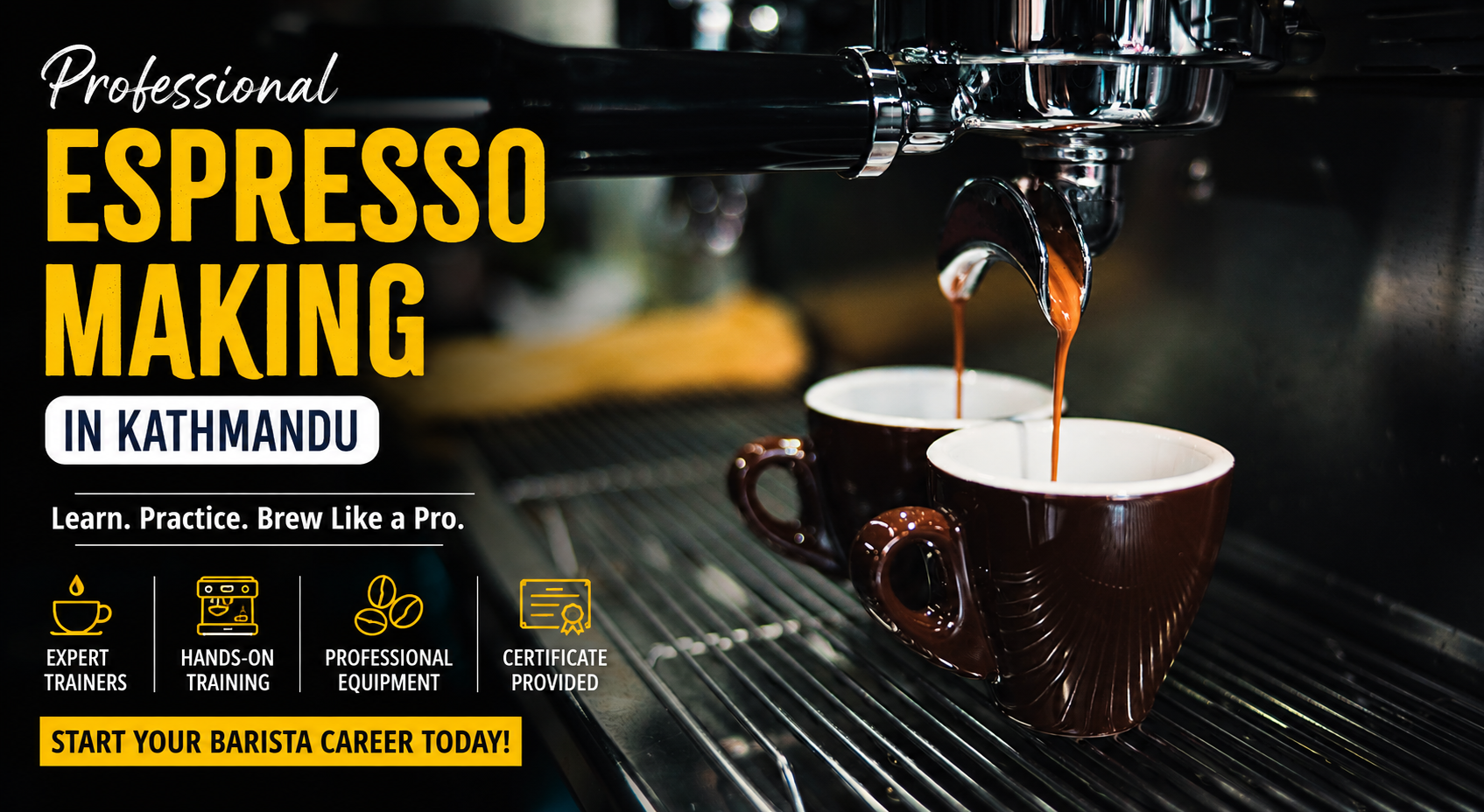
Description
Espresso is the foundation of almost every popular coffee beverage, from cappuccinos and lattes to macchiatos and flat whites. As Kathmandu's café culture continues to grow, the demand for skilled baristas who can prepare high-quality espresso has never been higher.
Whether you're planning to work in a specialty coffee shop, a luxury hotel, or start your own café, learning professional espresso making in Kathmandu is the first step toward building a successful career in the hospitality industry.
In this guide, we'll explore what professional espresso making involves, the skills you'll develop, and why enrolling in a barista training course can be a valuable investment.
Why Learn Professional Espresso Making?
Espresso is more than just a strong cup of coffee. It requires precision, consistency, and an understanding of coffee extraction.
Professional espresso training helps you learn how to:
- Prepare café-quality espresso consistently
- Operate commercial espresso machines
- Understand coffee bean characteristics
- Improve beverage presentation
- Meet international café standards
- Build confidence behind the coffee bar
These practical skills are highly valued by cafés, restaurants, hotels, and specialty coffee businesses across Nepal.
What Is Espresso?
Espresso is a concentrated coffee beverage made by forcing hot water through finely ground coffee under high pressure. It serves as the base for many coffee drinks, including:
- Espresso Shot
- Cappuccino
- Café Latte
- Flat White
- Americano
- Mocha
- Macchiato
A properly brewed espresso has three distinct layers:
- Crema: The rich golden foam on top.
- Body: The flavorful middle layer.
- Heart: The deep, concentrated coffee at the bottom.
What You'll Learn in Professional Espresso Making Training
A professional espresso course combines classroom knowledge with hands-on practice.
Coffee Bean Fundamentals
Before making espresso, students learn about:
- Arabica and Robusta coffee beans
- Coffee-growing regions
- Roasting levels
- Freshness and storage
- Coffee flavor profiles
Understanding these basics helps baristas produce better-tasting coffee.
Espresso Machine Operation
Students receive practical training on commercial espresso machines, including:
- Machine setup
- Temperature control
- Pressure management
- Group head cleaning
- Daily maintenance
- Safety procedures
Knowing how to operate and maintain equipment is essential in a professional café.
Coffee Grinding Techniques
Grind size plays a major role in espresso quality.
Training covers:
- Selecting the correct grind size
- Using professional grinders
- Adjusting grind settings based on humidity and coffee beans
- Measuring coffee doses accurately
Espresso Extraction
One of the most important skills is learning how to extract espresso correctly.
Students practice:
- Tamping techniques
- Water temperature control
- Extraction timing
- Shot consistency
- Identifying under-extracted and over-extracted espresso
These techniques help produce balanced flavor and a rich crema.
Milk Steaming and Frothing
Since many espresso-based beverages include milk, students also learn:
- Proper milk steaming
- Creating smooth microfoam
- Temperature control
- Pouring techniques
- Milk texture for different beverages
Popular Espresso-Based Drinks
Professional training usually includes preparing:
- Espresso
- Double Espresso
- Americano
- Cappuccino
- Café Latte
- Flat White
- Mocha
- Macchiato
- Iced Coffee
Students practice each drink repeatedly until they achieve consistency.
Basic Latte Art
Latte art enhances beverage presentation and customer experience.
Students learn beginner-friendly designs such as:
- Heart
- Rosetta
- Tulip
These techniques improve both creativity and precision.
Café Hygiene and Safety
Professional baristas must maintain high hygiene standards.
Training includes:
- Cleaning coffee equipment
- Food safety practices
- Personal hygiene
- Workspace organization
- Proper milk storage
Customer Service Skills
Coffee making is only one part of a barista's role.
Students also develop:
- Customer communication
- Taking accurate orders
- Handling feedback
- Teamwork
- Professional workplace etiquette
Excellent service encourages repeat customers and strengthens a café's reputation.
Equipment Used During Espresso Training
Professional barista courses typically provide hands-on experience with:
- Commercial espresso machines
- Coffee grinders
- Milk pitchers
- Tamper
- Knock box
- Digital scales
- Thermometers
- Cleaning brushes
- Shot glasses
Learning with industry-standard equipment prepares students for real café environments.
Who Can Join an Espresso Making Course?
Professional espresso training is suitable for:
- Students after SEE or +2
- College graduates
- Café employees
- Hotel staff
- Coffee enthusiasts
- Entrepreneurs planning to open a coffee shop
- Anyone interested in building a hospitality career
No previous experience is required for beginner-level courses.
Career Opportunities After Espresso Training
With Kathmandu's expanding café scene and Nepal's growing tourism industry, trained baristas have excellent employment prospects.
Career options include:
- Professional Barista
- Café Barista
- Hotel Barista
- Coffee Shop Supervisor
- Beverage Specialist
- Coffee Trainer
- Café Manager
- Coffee Business Owner
Professional espresso-making skills are also valuable for opportunities in Australia, Japan, the UAE, Qatar, cruise ships, and other international hospitality markets.
Why Choose Professional Espresso Training in Kathmandu?
Kathmandu is home to a growing number of cafés, specialty coffee shops, hotels, and hospitality institutes, making it an ideal place to develop barista skills.
A quality training program offers:
- Experienced instructors
- Practical, hands-on sessions
- Modern espresso machines
- Industry-focused curriculum
- Small class sizes
- Certificate upon completion
- Job placement guidance (where available)
Choosing the right training institute can help you gain practical experience and prepare for a rewarding career in the coffee industry.
Tips for Making Better Espresso
Here are a few habits every aspiring barista should develop:
- Use freshly roasted coffee beans.
- Grind coffee just before brewing.
- Measure coffee accurately.
- Tamp evenly with consistent pressure.
- Keep the espresso machine clean.
- Monitor extraction time.
- Practice consistently to improve technique.
Small adjustments can make a significant difference in the flavor and quality of your espresso.
Conclusion
Professional espresso making is one of the most valuable skills for anyone pursuing a career in cafés, hotels, or the hospitality industry. With Kathmandu's thriving coffee culture, learning to prepare high-quality espresso can open doors to exciting local and international opportunities.
Whether your goal is to become a skilled barista, work in a luxury hotel, or launch your own café, investing in professional espresso training is a practical step toward a successful future.
Other Blogs
- Bar Management Training Kathmandu: Build Professional Bar Management Skills
- Latte Art Course Kathmandu: Learn Professional Coffee Art Skills
- Pastry Making Classes in Kathmandu: Turn Your Passion for Baking into a Professional Career
- Cake Training in Nepal: Build a Career with Professional Baking Skills
- Short-Term Hotel Training Courses in Kathmandu
- Cocktail Making Course in Kathmandu: Everything You Need to Know Before You Enroll
- Frequently Asked Questions (FAQs) on 15 days Barista Class
- Kitchen Helper Training: Your Shree Ganesh Step to a Culinary world